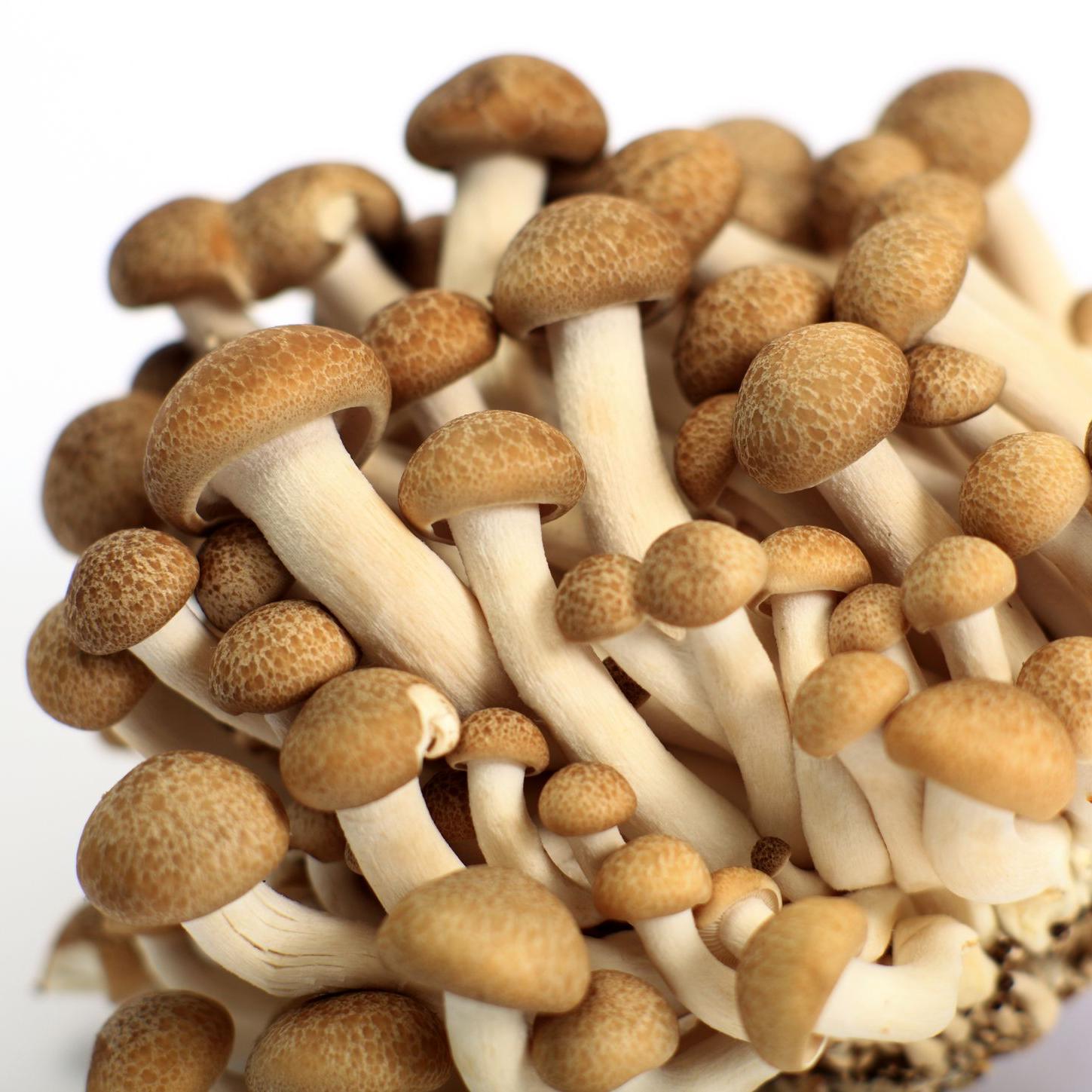
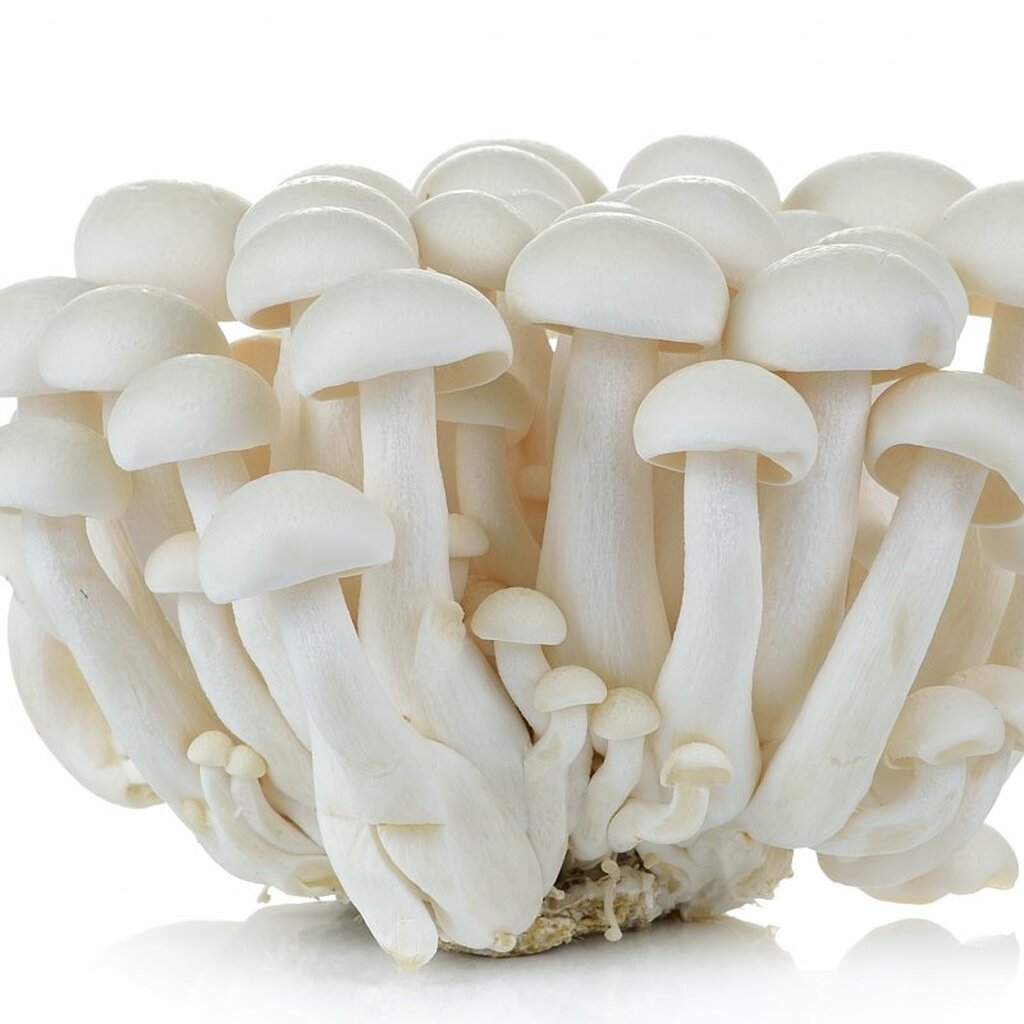
Beech Mushroom
Various strains available
Scientific Name: Hypsizygus tessulatus
Synonyms: White beech mushroom, Wood ear mushroom, Shimeji, Buna-shimeji, Tree mushroom, Bunapi
Distribution and Habitat in Nature: Saprobiont (secondary decomposer) and weak parasite, found on living and dead trees. Distributed in Europe, Asia, and North America
Ingredients: Selenium, glucans, niacin, triterpenes, vitamins B, D, and K
Suitable Substrate: Beech, birch, oak, maple, aspen, alder, linden
Usage: Edible mushroom, medicinal mushroom, health-promoting mushroom
In Japanese cuisine, it has long been a highly valued and versatile edible mushroom, as well as a medicinal and health-promoting mushroom used in Traditional Chinese Medicine (TCM).
Taxonomy:
Kingdom: Fungi
Class: Agaricomycetes
Subclass: Agaricomycetidae
Order: Agaricales
Family: Lyophyllaceae
Genus: Hypsizygus
Species: Hypsizygus tessulatus
Spores: white, 5-7 µm, subglobose
Breeding conditions:
Phase 1: Mycelium growth
Temperature: 21–24°C
Humidity: 95–100%
Duration: 30–45 days
CO2: >5,000 ppm
Air exchange: 0–1 per hour
Light: n/a
Phase 2: Primordia formation / initiation of fruiting
Temperature: 10–15 °C
Humidity: 98–100%
Duration: 7 - 12 days
CO2: 500 - 1000 ppm
Air exchange: 4 - 8 per hour
Light: 400 - 600 lux
Phase 3: Fruiting and harvesting
Temperature: 13–18°C
Humidity: (85) 90–95%
Duration: 5 - 10 days
CO2: 2000 - 4000 ppm
Air exchange: 2 - 4 per hour
Light: 400 - 600 lux
Harvest waves: 2 harvests, 3 weeks apart