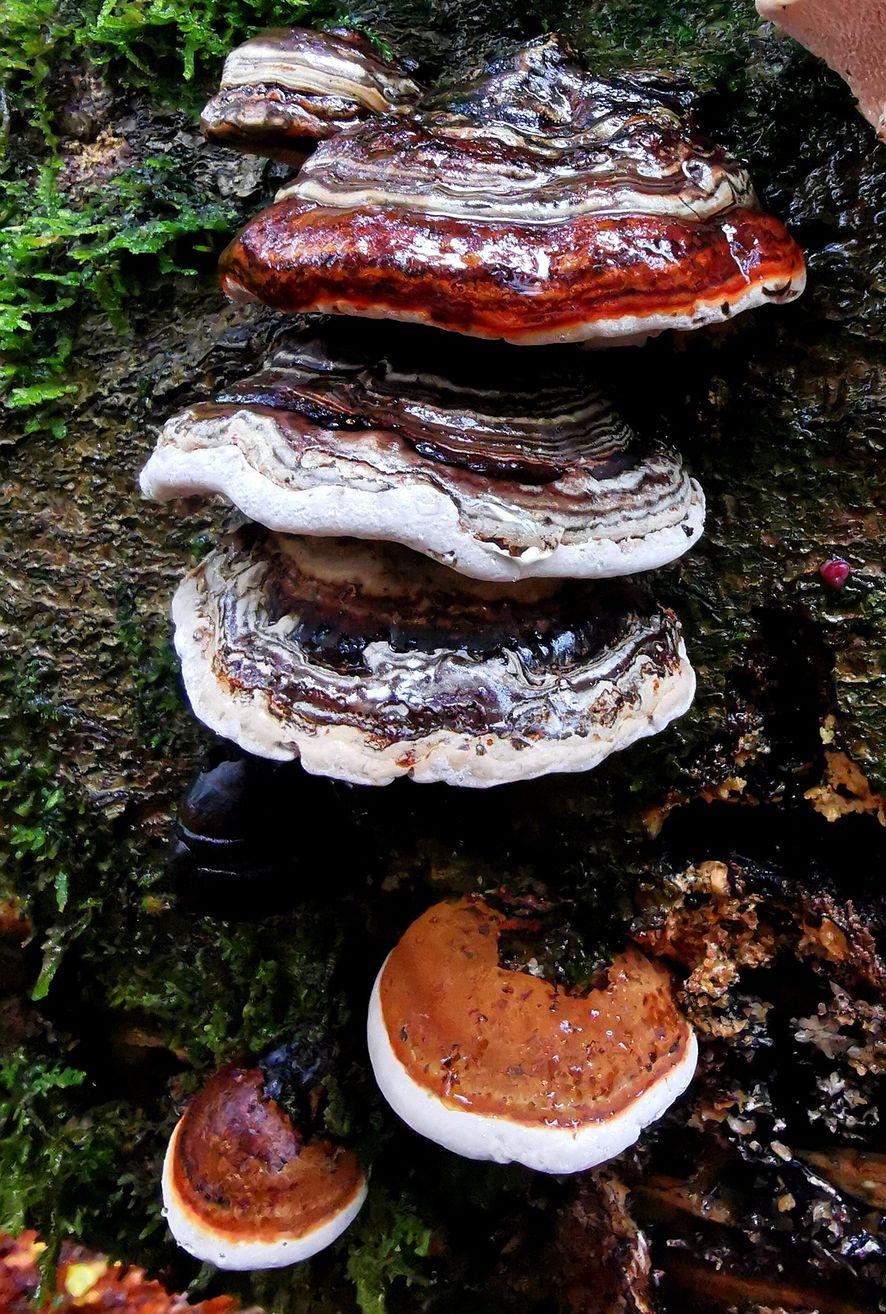
Tinder Fungus
Scientific name: Fomes fomentarius
Synonyms: Tinder Fungus, Hoof Fungus, Amadou Fungus
Distribution and habitat in nature: Saprobiont (secondary decomposer) and opportunistic parasite, found on living and dead trees in Asia, North America, and Europe, in near-natural forests, deciduous and mixed deciduous forests, and hardwood floodplain forests.
Ingredients: The Tinder Fungus contains a variety of natural ingredients that have made it valued in various cultures for centuries. These include primarily polysaccharides such as beta-glucans and glucuronoxylans, as well as secondary plant substances such as triterpenes and phenolic compounds. It is also rich in chitin, chitosan, and various minerals, including potassium, magnesium, calcium, and iron. This composition makes the fungus interesting not only in folk medicine but also in modern research.
Suitable substrate: Various hardwoods (beech, oak, elm, birch, hornbeam, alder, aspen, maple, birch, ash, willow, linden) rarely also on softwood
Usage: Medicinal mushrooms, fire lightning, leather production, incense, beekeeping, arts and crafts
Our ancestors, such as Ötzi, used tinder fungus, as the name suggests, as tinder for making fire and for transporting it. It has also always been used as a medicinal and vital mushroom and as a wound dressing for the initial treatment of open wounds. In the Alps and Carpathians, it was formerly processed into leather scraps in Bavaria, for example, as it is still done today in Romania, for example, for leather production, which is extracted from the trama. Beekeepers also use the trama to calm the bees with its smoke before harvesting the honey. Innovative star chefs use the dried and ground fruit bodies as incense to smoke fish and meat, for example, and thus create new flavors.
Taxonomy:
Kingdom: Fungi
Class: Agaricomycetes
Subclass: uncertain position (incertae sedis)
Order: Polyporales
Family: Polyporaceae
Genus: Fomes
Species: Fomes fomentarius
Spores: cylindrical to long ellipsoidal in shape and 15–22 × 4.4–7 µm