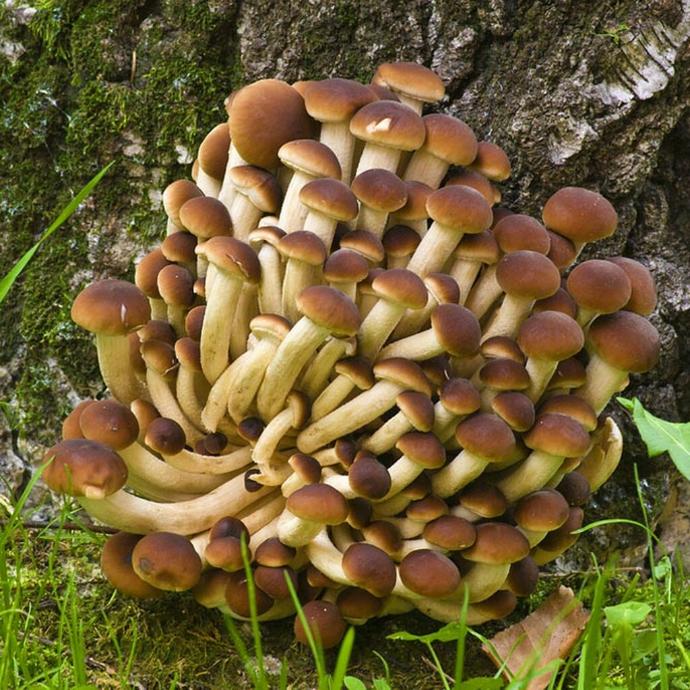
Pioppino
Scientific Name: Agrocybe aegerita
Synonyms: Southern Field Mushroom, Southern Cap Mushroom, Yanagi-matsutake, Zhuzhuang-Tiantougu
Distribution and Habitat in Nature: This mushroom thrives in warmer temperatures and is found throughout Southern Europe, the southern USA, Mexico, and in comparable climates in Asia. It grows saprophytically on various hardwoods, often found on poplars, willows, maples, and in China, on tea trees. The Southern Field Mushroom is the only species in the genus Agrocybe that occasionally also grows parasitically.
Ingredients: Pioppino mushrooms contain high-quality plant proteins, fiber, vitamin D, B vitamins, potassium, phosphorus, magnesium, and antioxidants.
Suitable Substrate: Hardwood (particularly suitable: beech, willow, poplar, maple)
Usage: edible mushroom
This delicate edible mushroom with its typical forest aroma is enjoying growing popularity worldwide, but was also cultivated in ancient Rome. Its nutty aroma and firm, crunchy flesh make the pioppino a delicious edible mushroom.
Taxonomy:
Kingdom: Fungi
Class: Basidiomycetes
Subclass: Agaricomycetidae
Order: Agaricales
Family: Strophariaceae
Genus: Agrocybe
Species: Agrocybe aegerita
Spores: Smooth, ovoid to elliptical, brown, 9–11 x 6–6.5 µ
Cultivation Conditions:
Phase 1: Mycelium Growth
Temperature: 21 - 27°C
Humidity: 95 - 100%
Duration: 20 - 28 days
CO2: >20,000 ppm
Air Exchange: 0 - 1 per hour
Light: n/a
Phase 2: Primordia Formation / Initiation of Fruiting
Temperature: 10 - 16°C
Humidity: 95 - 100%
Duration: 7 - 14 days
CO2: <2,000 ppm
Air Exchange: 4 - 8 per hour
Light: 500 - 1,000 Lux
Phase 3: Fruiting and Harvesting
Temperature: 13 - 18°C
Humidity: 90 - 95%
Duration: 4 - 6 days
CO2: <2,000 ppm
Air Exchange: 4 - 8 per hour
Light: 500 - 1,000 Lux