Cultivation cycle of the fungus
The techniques and working steps in mushroom cultivation always follow the same scheme, only the formulation of the substrates and the climatic conditions during mycelium growth and fertilization change
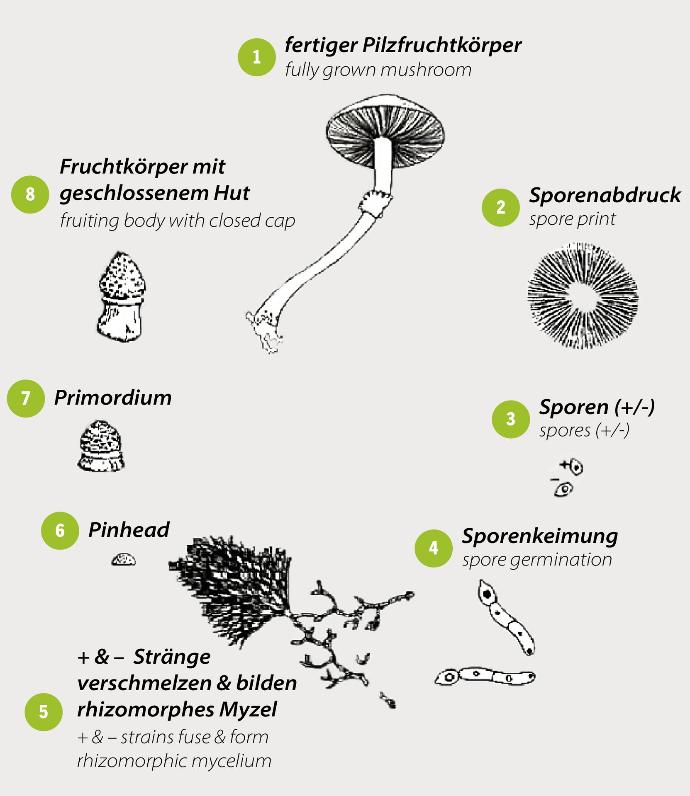
The spores are first germinate in the laboratory under controlled conditions on nutrient soils in petri dishes. The most beautiful and strong mycelium strands are refined by selection, this increases the yield. The selected mycelium is now propagated on grain brood (a substrate based on grain).
The seed brood, as soon as it is completely populated with fungal mycelium, serves to inoculate a suitable fertilization substrate, through which the fungus grows. When this phase is completed, fertilization is initiated by a change in the environmental conditions (humidity, temperature, fresh air).
According to the way in which fungi provide themselves with food, three groups can be distinguished:
Saprobionts decompose organic material such as manure, wood residues, or straw. In the natural nutrient cycle within an ecosystem, fungi represent the largest recycling operation. Most cultivated mushrooms fall into this group. It is especially important to note that fungi, like most living organisms, react differently under cultivation conditions than they do in the wild. When the substrate (which refers to the nutrient base on which fungi are cultivated) is perfected, mushroom cultures yield significantly higher returns than in the wild, where only occasional fruiting bodies sprout from a larger mycelium network (mycelium is the part of the fungus that grows underground). Naturally growing mushrooms fruit only during certain seasons and under suitable weather conditions.
It is commonly known that fungi can exist as parasites. In this case, the fungus infects a still vital organism (its "host") and extracts energy and nutrients from it. The most well-known examples are various skin fungi and honey fungi (Armillaria spp.). Noteworthy is the honey fungus, whose mycelium can cover an area of several thousand square meters and reach a depth of 500 to 800 meters, making it the largest living organism on Earth.
Some fungi live as symbionts for the mutual benefit of all involved systems. When fungi and plants form a partnership, it is called mycorrhiza. The fungus provides the plant with minerals and nutrients that the plant itself cannot extract and absorb from the soil to the same extent. Additionally, a larger amount of water is stored in the fungus mycelium, which is closely interwoven with the plant roots, helping the plant endure dry periods more easily. In return, the plant supplies the fungus with essential carbohydrates (sugars), which it produces in sufficient quantities through photosynthesis.
Fruiting techniques:
Other techniques:
Mushroom cultivation
for the advanced:
-
Production of spore prints
- Microscopic examination of spores
- Preparation of an agar culture medium in Petri dishes
-
Mycelium cultivation from spores
-
Mushroom cloning
- Selection of mycelial strands
- Sterilizing rye substrate for grain spawn
-
Inoculation of grain spawn with mycelium
on agar medium
- Sterilization of wooden substrates
-
Inoculation of wooden substrates with grain spawn