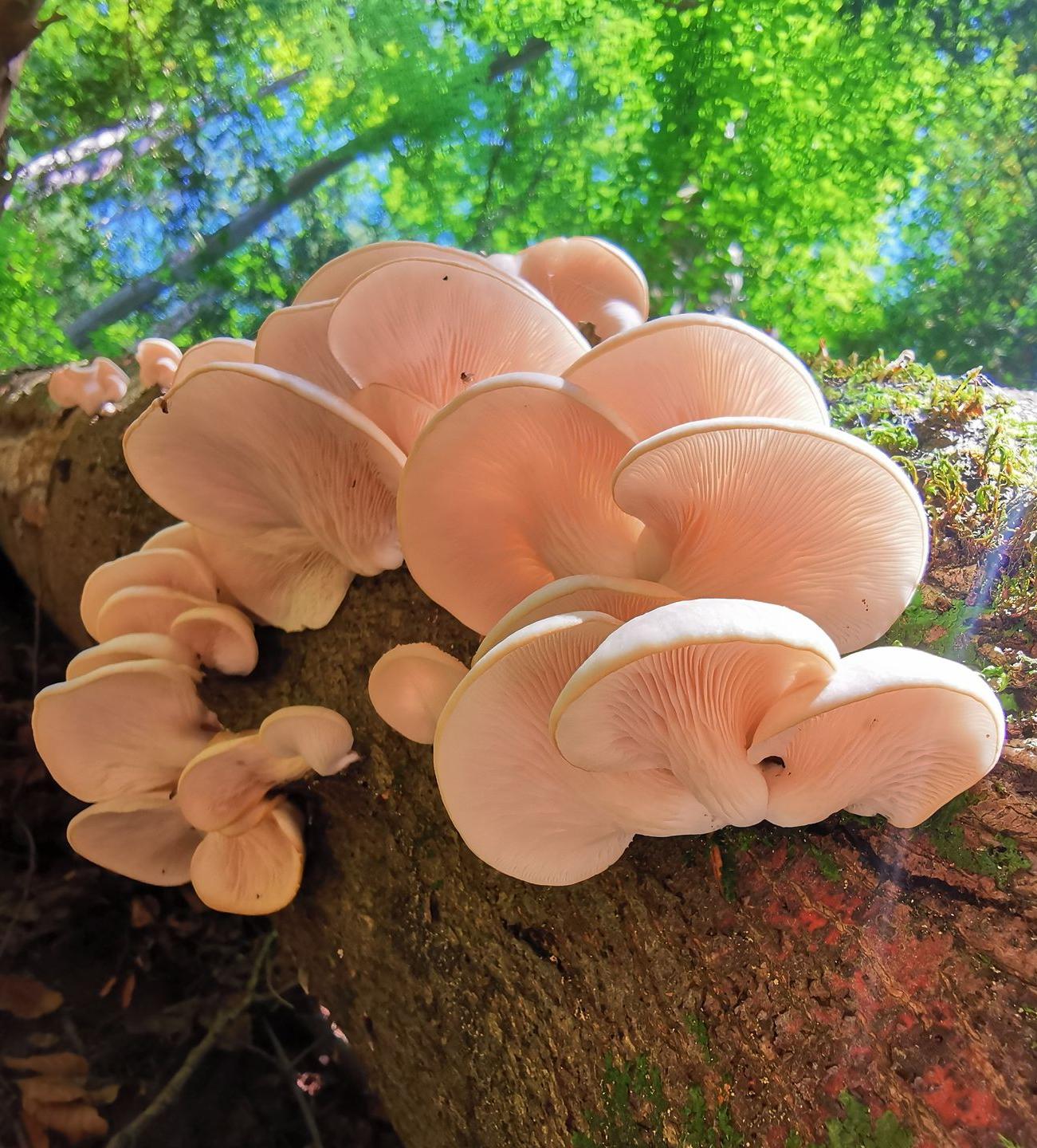
Phoenix Oyster Mushroom
Scientific name: Pleurotus pulmonarius
Synonyms:
Indian Oyster Mushroom, White Oyster Mushroom, Italian Oyster Mushroom, Dhingri
Distribution and habitat in nature: Like the blue oyster mushroom, the lungwort mushroom mainly lives on diseased and dead deciduous trees, rarely on conifers. It is found worldwide in subtropical to temperate climate zones and generally prefers warmer regions.
Ingredients: The Phoenix Oyster Mushroom is a nutrient-rich mushroom that offers many healthy ingredients. It contains valuable proteins, fiber, and healthy fats. It also provides B vitamins (such as B1, B2, and B3), vitamin D, and minerals such as potassium, magnesium, and iron. The mushroom is also a good source of antioxidants and beta-glucans, which can strengthen the immune system and have a positive effect on cholesterol levels.
Suitable substrate: Straw, paper, coffee grounds, coffee bean pulp, hardwood (poplar, oak, alder, aspen, maple, birch, ash, beech, willow, elm), softwood (spruce, fir)
Usage: Edible mushroom, medicinal mushroom
This mushrooms are a delicious and healthy ingredient in the kitchen and ideal for vegetarian and vegan dishes. Their taste, shelf life, and preparation in the kitchen are comparable to “normal” oyster mushrooms, although king oyster mushrooms fruit at warmer temperatures and are therefore ideal for cultivation during the warmer months. They are characterized by a wide variety of types, are very easy to cultivate, and offer growers a rich resource for new strains.
Taxonomy:
Kingdom: Fungi
Class: Agaricomycetes
Subclass: Agaricomycetidae
Order: Agaricales
Family: Pleurotaceae
Genus: Pleurotus
Species: Pleurotus pulmonarius
Spores: mostly white to yellowish, gray, 7.5–11 x 3–4 µ, clamps are present
Growing conditions:
Phase 1: Mycelium growth
Temperature: 24–29 °C
Humidity: 90–100%
Duration: 8–14 days
CO2: >5,000 ppm
Air exchange: 1 per hour
Light: n/a
Phase 2: Primordia formation / Start of fruiting
Temperature: 10–24 (27) °C
Humidity: 95–100%
Duration: 3–5 days
CO2: 400–800 ppm
Air exchange: 5–7 per hour
Light: 1,000–1,500 (2,000) lux
Phase 3: Fruit formation and harvest
Temperature: 18–24 °C
Humidity: 85–90%
Duration: 3–5 days
CO2: 400–800 ppm
Air exchange rate: 5–7 per hour
Light: 1,000–1,500 (2,000) lux