Our substrates are produced FRESH for you, so the production time is approximately 3 - 6 weeks.
Buy more, save more—check out our volume discounts! (Visible in your shopping cart at the latest!)
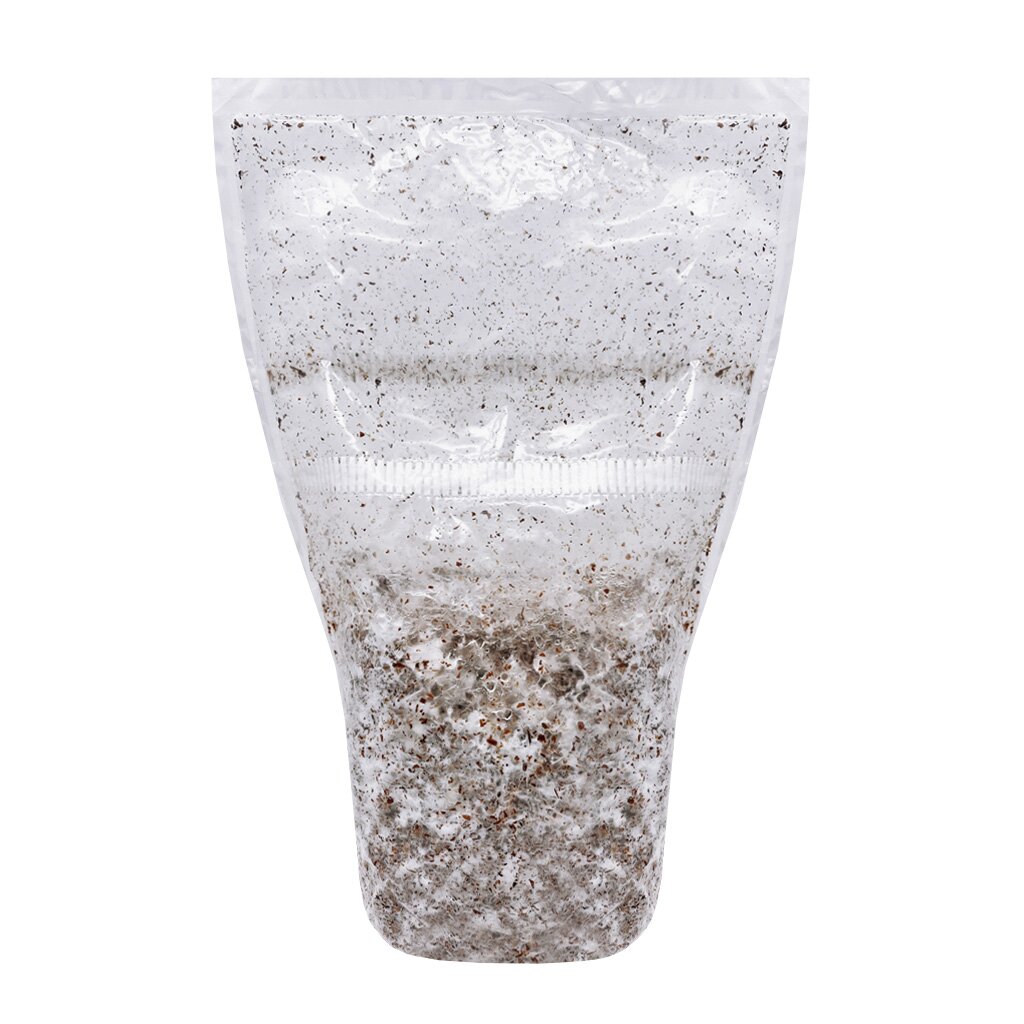
Cyanescens Ballard - Mycorestaurationbag
spawn for mycorestauration
IN STOCK - we ship immediately
Quantity discount:
from 3 pcs.
from 6 pcs.
from 30 pcs.
from 100 pcs.
Cyanescens Ballard - Psilocybe Cyanescens - Mycorestaurationbag
Synonyms: Gluehead, blue-green spotted or blue-coloured baldhead
Toxic! Not intended for consumption! The mushroom, also known as the sticky cap because of its sticky upper side, appears to have originated in North America. It has now spread to North Africa and large parts of Central Europe. As a wood utiliser, it colonises mulch areas under suitable conditions, which is why it is referred to as a cultural successor. As the raw materials are typically used up after 2 - 5 years, the natural occurrences apparently disappear again after a few years.
As a wood-decomposing fungus, it plays an important role in mycorestoration because psilodybe fungi are among the few species that can decompose significant chemical pollutants.
Its cap is sticky in fresh specimens, in young mushrooms it is initially cone-shaped, later flattening and wavy. The colour of the cap varies greatly from brown, ochre, yellowish to whitish and is 1 - 7 cm in size. The lamellae are bulging. This colour can also vary from greyish to reddish brown with a lighter edge. The stalk is natural white, 5 - 8 cm long and a few millimetres thin.
The bluish baldcypress (not to be confused with the bluish or stately baldcypress) has a dull odour reminiscent of potatoes and a bitter taste.
There are natural occurrences of the bluish baldy in large parts of Central Europe. Due to its constituents, its collection, possession and sale for human consumption is prohibited in many countries
This fresh product is prepared fresh for you to order. The production time is around 3 - 6 weeks.
The mushroom spawn should be processed immediately after delivery.
If the product cannot be processed immediately, it can be stored in the refrigerator at 4 °C for up to 2 weeks.
We recommend that you plan for this when ordering and making your preparations according to the instructions.
Suitable cultivation methods: wood logs, -also for mycorestauration, spawn bags for indoor greenhouse
Suitable Substrates: Straw, paper, coffee grounds, pulp from coffee beans, hardwood
Suitable woods are maple, birch, beech, oak, alder, ash, aspen, poplar, elm and willow.
This breeding strain bears fruit when grown outdoors in late autumn at the first frost.
You receive mushroom spawn colonised by mushroom mycelium based on organic raw materials (wood, rye bran from organic farming) in bags specially designed for sterilisation.
Depending on the type of mushroom, they are available in the following sizes:
1 autoclave bag with approx. 1 litre (500 grams) is suitable for inoculation and for propagation over 4 - 8 weeks in sterilised wood substrate before inoculating the mushroom bed (see instructions).
1 autoclave bag with approx. 6 litres of mushroom spawn is suitable for inoculating an 80 x 80 cm mushroom bed.
Mycological restoration using mushroom beds:
Some types of fungi are suitable for breaking down these toxins and removing them from the environment.
To do this, fungal mycelium from the relevant types of fungi is distributed in the contaminated soil and mixed with a suitable culture medium in order to cover a large area of the pollutant source. The mycelium strands grow through the soil. They absorb individual toxins directly or break them down into their components, rendering them harmless.
The fungus absorbs the toxins into its fruiting bodies. These must be harvested at the end of the life cycle and disposed of properly.
The areas of application for this type of fungus are:
- Dimethylmethylphosphonates (DMMP), which are contained in nerve agents such as VX, soman and sarin,
- Persistent organic hydrogens from flame retardants, fuel additives and insecticides such as DDT,
- nitrate- and phosphorus-bound toxins, some of which are used intensively on agricultural land.
Sources:
STAMETS, La Dena Che'. Best Mycorestoration Practices for Habitat Restoration of Small Land Parcels. 2012.
STAMETS, Paul. Mycelium running: how mushrooms can help save the world. Ten speed press, 2005, pp. 85 - 113..
Product safety information:
The fruiting bodies of this species are not for human and animal consumption!
Toxicity: poisonous.
For delivery in following countries - requirement of extra import permit is necessary:
California, Norway, Russia, Switzerland and others.
Please note the regulations in your area before placing an order.
Taxonomy:
Class: Agaricomycetes
Subclass: Agaricomycetidae
Order: Champignonaceae (Agaricales)
Family: Hymenogastraceae
Genus: Bald caps (Psilocybe)
Species: Blue bald cap (Psilocybe azurescens)
Breeding conditions:
The exact breeding conditions are still at the research stage.